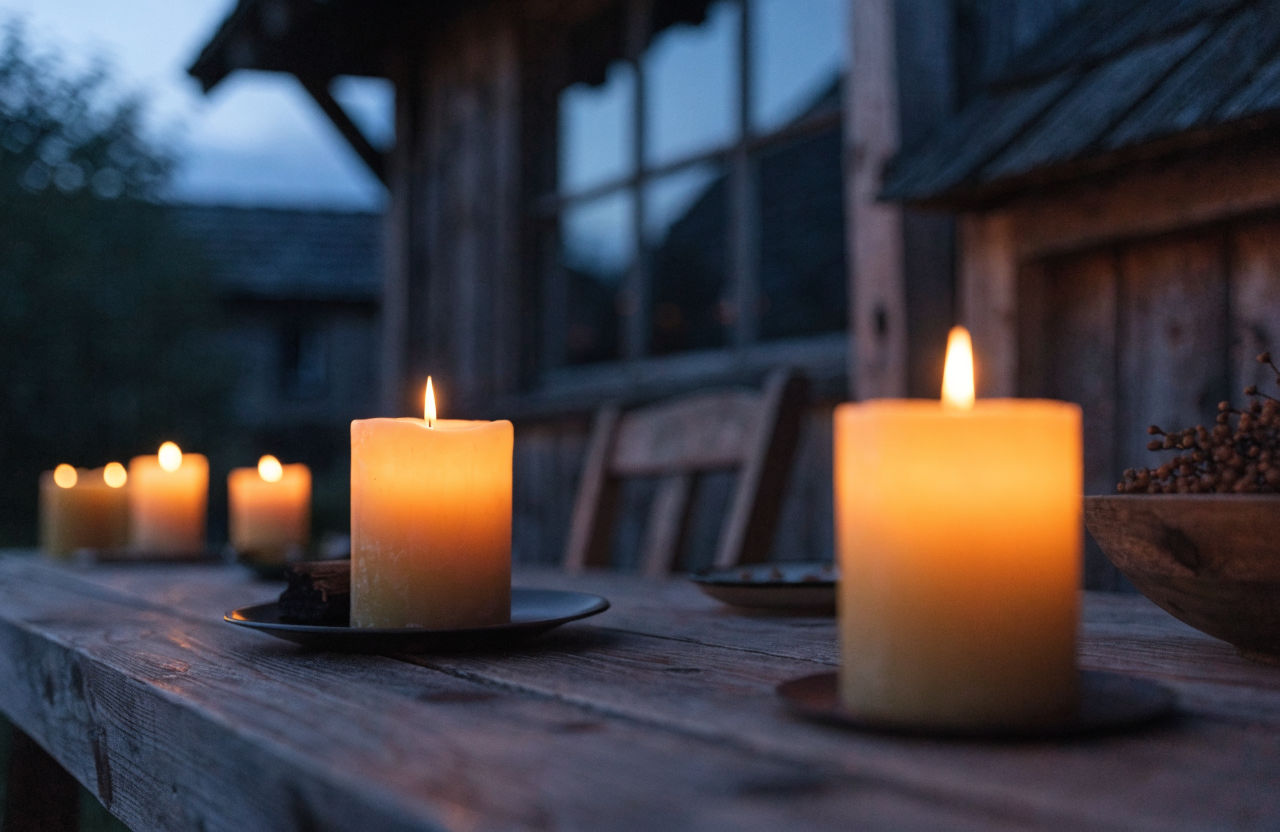
Every devoted festival-goer knows the strange quiet that settles in once the season ends. The stages come down, the tour dates dry up, and the winter stretches out with no field to dance in and no lasers cutting the night. It is the off-season, and while nothing quite replaces the roar of a live set, there is a certain pleasure in swinging all the way to the other extreme: trading strobes and subwoofers for warm, still, natural light.
When the Festival Season Goes Quiet
The culture around electronic music has always been about atmosphere as much as sound. We obsess over the lighting rig, the visuals, the way a room feels when everything lines up. So it is no great leap to bring that same attention to ambiance indoors when the festivals pause for winter. The instinct to craft a mood does not switch off in December; it just looks for a smaller, quieter canvas.
For a lot of people, that canvas is candlelight, and there is a real difference in the material you choose. Natural beeswax christmas tree candles burn with a warm, golden glow and a faint honey scent, and unlike paraffin they give off no harsh smoke, which matters in a closed winter room. Their light is soft and living in a way an LED never manages, the analog counterpart to a season spent surrounded by screens and synthetic color.
If you have ever wanted to make your own, this short video shows how beeswax candles come together:
The Analog Answer to a Digital High

There is something fitting about an artist or a fan who lives inside digital sound reaching for the most analog light there is. A beeswax candle is about as far from a signal chain as you can get: no power, no code, just wax, wick, and flame. That contrast is exactly the point. After months of engineered sensory overload, a single honest flame on the table is a kind of reset, a way of letting the nervous system come down gently.
The sensory overlap is closer than it first appears. Festival culture is deeply about scent, warmth, and shared space, not just decibels, and a room full of natural candlelight hits many of the same notes at a lower volume. Gather a few friends from the circuit, put on a mellow ambient set, and let the candles do the lighting; you have essentially built a tiny, low-key afterparty for the season when the big ones are gone.
Setting a Scene Worth Coming Home To
Setting a good scene is a skill festival people already have in abundance. Cluster a few candles at different heights, keep the rest of the lighting low, and choose natural materials that feel warm rather than clinical. The same eye that judges a stage design can turn a plain winter living room into somewhere you actually want to spend a long, dark evening, no ticket required.
The season will turn again, the line-ups will be announced, and the fields will fill back up soon enough. Until then, there is no shame in embracing the quiet and lighting the room the old way. Trade the strobe for a steady flame for a few months, let the warm light do its slow work, and you may find the off-season becomes something you look forward to rather than merely endure.